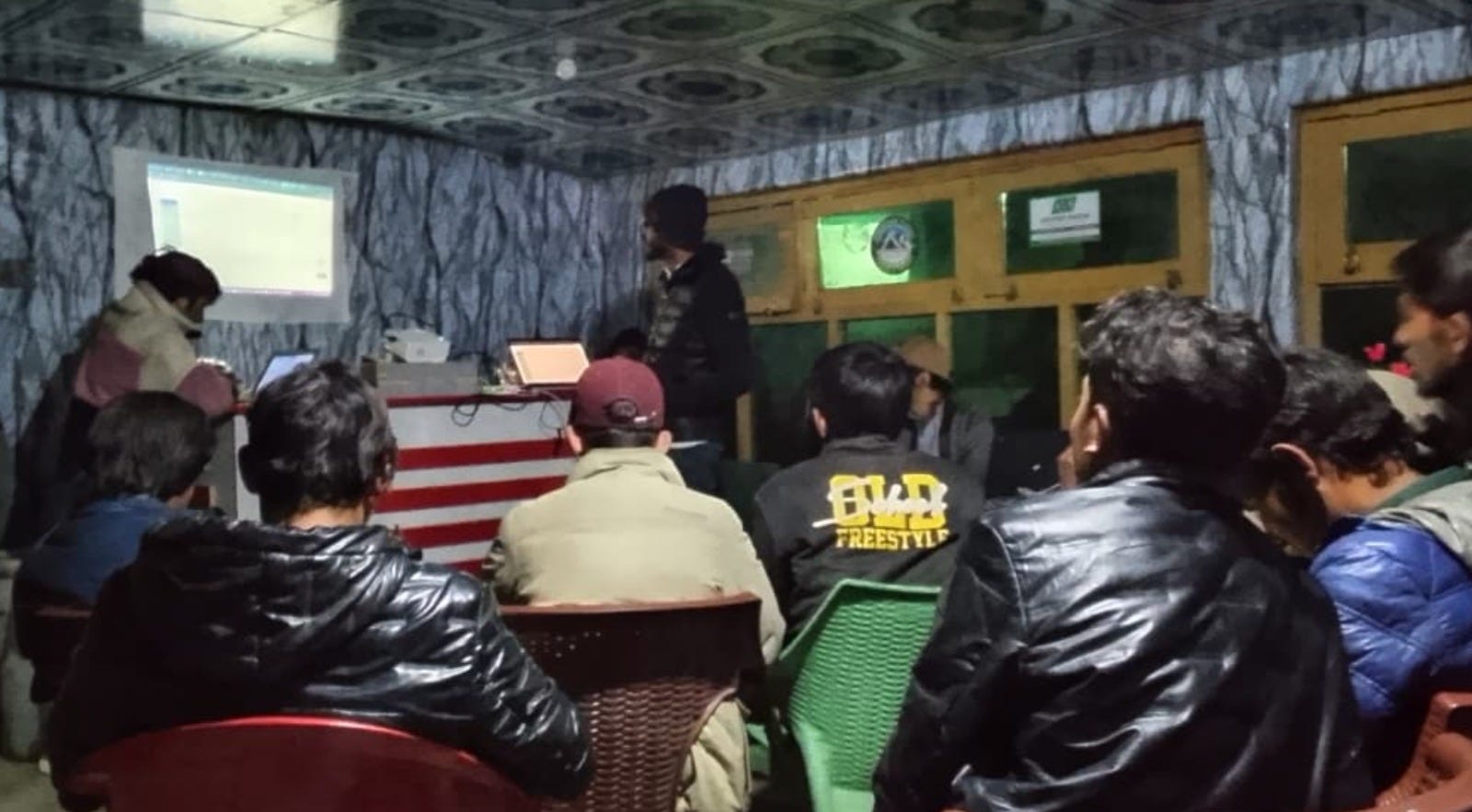
This past week, jugnuu’s Jibran taught the first digital literacy class in Askole. If you don’t know Askole, it is the last village before the Baltoro Glacier in the Himalayas. It’s where every serious K2 expedition begins. From that point on, it’s rock, ice, and risk. Four of the world’s fourteen 8,000-meter peaks are accessed from there.
It is one of the most remote places in Pakistan. And that is exactly why this matters.
While people in big cities argue about AI replacing jobs, a group of students in Askole were being introduced to AI for the first time. They learned about basic computing. Canva. YouTube editing. How digital tools actually work. Practical exposure.
Ajay Banga, the President of the World Bank, recently spoke about the youth jobs gap and highlighted sectors with real potential in emerging markets: infrastructure, agriculture, tourism, healthcare, and local value-added manufacturing. Tourism stood out. It often creates the most jobs per dollar invested.
Askole already lives inside the tourism economy. Every climber to K2 passes through it. Porters, guides, logistics teams, camp operators. Yet most of the digital, branding, and financial value sits elsewhere. That gap exists because people in Askole lack access.
So the plan is simple.
Teach communication. Teach digital tools. Teach financial literacy. Train two or three students deeply enough that they can eventually teach others. Train the trainer and build local capacity instead of dependency.
Internet in Askole is unstable. So Jugnuu will adapt. Some classes through Google Meet. Some recorded. Some hybrid. This is not a polished tech campus. It is real-world constraint.
But here is the larger issue.
Pakistan’s youth face more than unemployment. There is social fragmentation. Trust in institutions is low. Economic frustration builds quietly. When young people feel disconnected from opportunity, that frustration does not disappear. It hardens.
Jugnuu’s answer is to provide practical skill and shared projects. When students sit together learning something useful, they are not arguing about sect or class. They are solving problems. That matters.
Jugnuu’s Askole campus is about leverage. If even a handful of students gain real digital literacy, they can manage bookings, handle expedition media, support local businesses, build online visibility for guesthouses, manage finances, or eventually create their own ventures.
Small inputs. Long-term shift. No grand claims. Just steady work. Sometimes development is not a policy paper. It is one laptop in a cold mountain village, turned on for the first time.
If you believe human capital matters, you already understand why this is important. And Jugnuu is just getting started.