

A young person can have talent, skill, and ambition, yet lose confidence the moment someone says, “Tell me about yourself.”
That question sounds simple. For many students, it is one of the hardest questions to answer. They know their name. They know where they study. They may even know graphic design, video editing, presentation design, AI tools, or basic business communication. Then the moment comes to speak, and everything feels scattered. The words do not arrive in the right order.
This happens more often than people admit. In my own career journey, I have seen students, fellows, colleagues, and people from different parts of the world struggle with introducing themselves. Sometimes the problem is fear. Sometimes it is lack of preparation. Sometimes it is something even more basic. Nobody ever taught them how to do it.
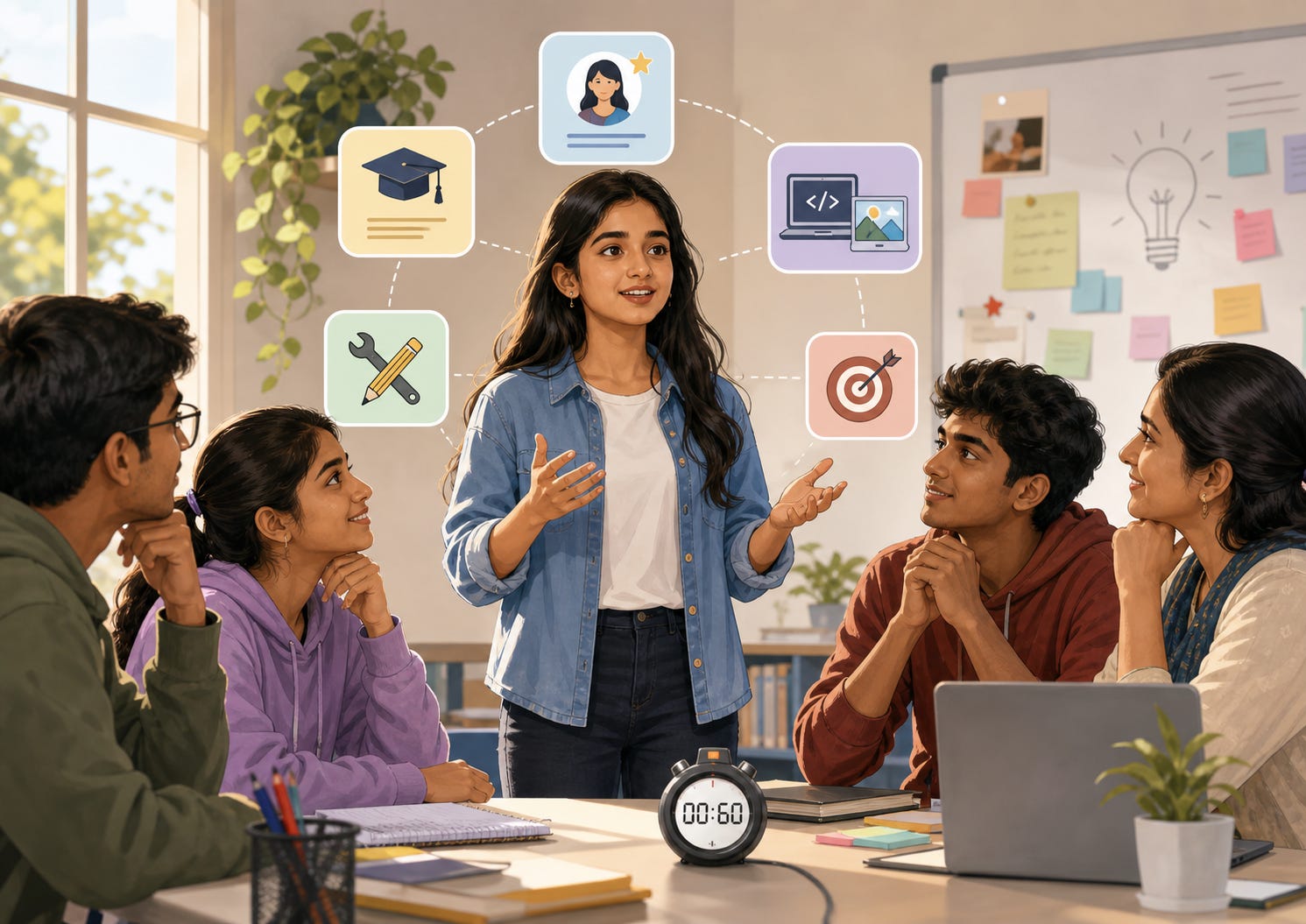
The good news is that introducing yourself is a skill. It can be learned, practiced, and become a normal part of your routine. Confidence does not always come before you speak. Many times, confidence comes after you have practiced enough to know what you want to say.
A strong self-introduction matters because the first minute can set the tone for everything that follows. In a job interview, it helps the interviewer understand your confidence and direction. In a classroom presentation, it helps your audience listen with interest. In a business meeting, it helps people remember who you are. In online opportunities, it helps you sound clear instead of confused. The world is full of people with skills, but the people who can explain their skills clearly often get noticed first.
A 60-second introduction is useful in many situations. You may need it in a job interview, business meeting, school presentation, internship application, networking event, online meeting, scholarship interview, or even a short conversation with someone who can guide you. These moments can feel small, but they often open bigger doors.
Before you introduce yourself, though, you need to know what you are introducing. This is the part many students miss. A good introduction begins before you speak. It begins with self-knowledge. You need to understand your background, your interests, your values, your skills, your experience, and your goal. These are the building blocks of your story.
Many students lose confidence because their own story is unorganized. They have done projects, learned skills, helped family members, solved problems, practiced tools, or supported classmates, yet they do not know how to turn those experiences into clear words. When asked to speak, they feel empty. The truth is that they are usually not empty. Their thoughts are simply scattered.
This is why every student should ask a few questions before writing an introduction.
Who am I?
Where am I from?
What am I learning?
What skill am I building?
What project have I worked on?
What do people say I am good at?
What goal am I working toward?
Once you answer these questions, your introduction becomes easier because you are no longer inventing words under pressure. You are arranging the truth in a simple order.
A strong 60-second introduction usually has five parts: name, background, skill, project, and goal. This structure works because it gives the listener a complete picture without turning your introduction into a long speech. You are not telling your whole life story. You are giving people enough information to understand who you are, what you can do, and where you are going.
Start with your name and background. This should be simple. You can say, “My name is Ayesha, and I am a student from Karachi.” Or you can say, “My name is Hamza, and I am currently learning digital skills through Jugnuu.” This first line creates a clear foundation. Do not rush it. Say it calmly.
Next, explain your skill or area of interest. This helps the listener understand what you are building. A Jugnuu student might say, “I am learning graphic design and presentation skills.” Another student might say, “I am interested in video editing and digital media.” Another could say, “I am learning how to use AI tools to create better school and work projects.” This part should be direct and easy to understand.
After that, add a small background story or reason. This makes your introduction more human. Instead of saying only, “I like design,” you can say, “I became interested in design because I enjoy turning ideas into visuals people can understand.” A student interested in engineering might say, “Since childhood, I enjoyed fixing things, building small objects, and understanding how machines work.” A small personal detail helps people connect with you.
Then mention one project or experience. This is where your introduction becomes stronger. Many people say, “I am hardworking,” “I am passionate,” or “I am motivated.” These words are common. They become stronger when you connect them to proof. Say what you have done. Mention a class project, a video, a presentation, a logo, a poster, a social media design, a volunteer activity, or a small task where you practiced your skill.
For example, you could say, “I recently created a short video presentation about my personal story.” Or, “I designed a logo and presentation for a class project.” Or, “I used AI tools to create a poster and caption for a school activity.” These details show effort. They tell the listener that you are already practicing, even if you are still learning.
Finally, end with your goal. This gives your introduction direction. You might say, “My goal is to build a small portfolio and apply for freelance projects.” Or, “My goal is to improve my presentation skills so I can speak more confidently in class and interviews.” Or, “My goal is to keep learning digital skills and use them to support my education and future career.” A goal makes you sound serious. It shows that you are moving toward something.
Here is a simple script every student can practice:
“My name is ______, and I am from ______. I am currently learning ______. I became interested in this because ______. Recently, I worked on ______, where I practiced ______. My goal is to ______, and I am looking for opportunities where I can keep learning and use my skills.”
Here is how it sounds when completed:
“My name is Ayesha, and I am from Karachi. I am currently learning graphic design and presentation skills through Jugnuu. I became interested in design because I enjoy turning ideas into visuals that people can understand. Recently, I created a logo and short presentation for a class project, where I practiced layout, color, and simple branding. My goal is to build a small portfolio and use my skills to help small businesses and community projects present themselves better.”
That introduction is clear, confident, and realistic. It does not sound arrogant. It does not sound weak. It tells the listener who the student is, what she is learning, what she has practiced, and where she wants to go.
Here is another example for a student interested in video editing.
“My name is Hamza, and I am a student interested in video editing and digital media. Through Jugnuu, I have been learning how to edit short videos, use captions, and create simple content for online platforms. I became interested in this because videos are one of the fastest ways to tell a story today. Recently, I created a short video presentation about my personal journey. My goal is to keep improving my editing skills, build a portfolio, and apply for freelance or internship opportunities.”
This introduction works because it gives the listener something real to remember. It does not simply say, “I want to be successful.” It shows the student’s skill, effort, project, and direction.
A 60-second introduction usually contains around 130 to 150 words. If you go far beyond that, you may start speaking too fast, and your audience may struggle to follow you. If you speak slowly and finish before 60 seconds, that is fine. A short, clear introduction is better than a long, confusing one.
There is also room to sound human. You are not a robot. In a friendly classroom presentation or group activity, you can begin with a light comment if it feels natural. For example, you might smile and say, “This room is more packed than I expected, so I may need one second to breathe.” People may laugh, and that small moment can help you relax. In a formal interview, however, keep your tone warm, respectful, and direct.
The biggest mistake students make is trying to speak without preparation. They wait until the moment arrives and hope the right words will come. Sometimes they do. Often they do not. Preparation protects you from panic. Write your introduction. Read it out loud. Time yourself. Remove any sentence that sounds too long. Practice until the words feel natural.
The second mistake is using empty words. “I am hardworking” sounds better when you can show the work. “I am passionate” sounds better when you can show what you practiced. “I want to be successful” sounds better when you can explain the next step you are taking. Specific details make you believable.
The third mistake is apologizing for being a beginner. Never be ashamed of learning. Every skilled person started with little experience. You can be honest without making yourself sound small. Say, “I am currently learning,” then show what you have already practiced. That is enough.
Students should also ask people close to them what strengths they notice. A teacher, friend, parent, mentor, or classmate may see something you miss. They may say you explain things well, stay calm under pressure, help others, learn quickly, solve problems, organize tasks, or notice details. These observations can help you understand yourself better. They can also give you better words for your introduction.
A 60-second introduction is more than a speaking exercise. It teaches you how to see yourself clearly. It forces you to connect your identity, skills, experiences, and goals. That matters because the modern world rewards people who can explain their value. Skills open doors, but communication helps people notice those skills.
For Jugnuu students, this lesson is especially important. Many of you are learning practical tools that can change your future: graphic design, video editing, presentations, AI tools, branding, and digital communication. These skills matter. But your skills need a voice. A clear introduction gives that voice shape.
So before your next interview, presentation, meeting, or online opportunity, do not wait until the last moment. Write your 60-second introduction today. Practice it until it feels natural. Say it slowly. Say it clearly. Say it like someone who is still learning, but already moving forward.
You do not need to be perfect.
You need to be prepared.
And once you know how to explain who you are, the room starts to feel a little less frightening.
Jugnuu is building skill, confidence, and opportunity where it matters most. Support the work. Visit a campus. Help more young Pakistanis gain the training that can change a life.