

Day 6 marks a powerful milestone. Huzaifah has reached the summit of Mount Kilimanjaro. The climb is complete. What he set out to do, he finished with grit, resolve, and a clear purpose: to climb for Jugnuu. We couldn’t be more proud of him.
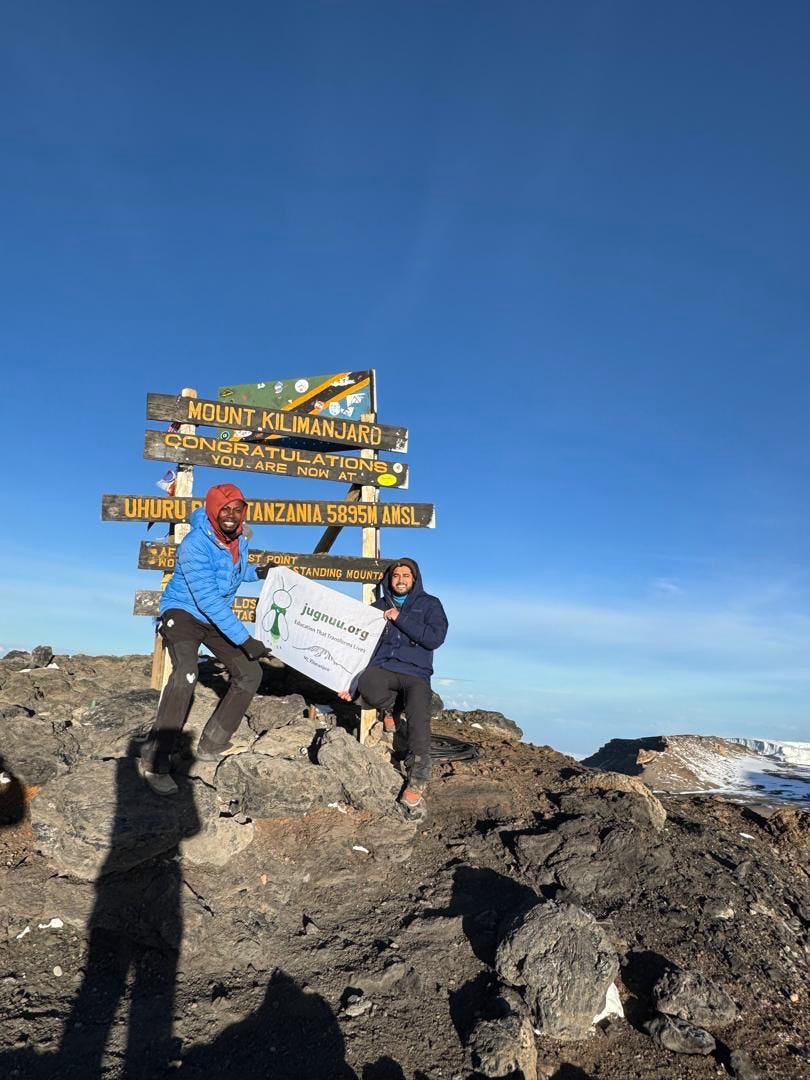
Thank you to everyone who has donated so far. While Huzaifah has reached the summit, our fundraising goal is still ahead of us. We have $7,931 left to raise to fully deliver on the mission behind this climb. We’re counting on you, our rope holders, to help us close this final stretch. Please keep sharing, keep spreading the word, and keep standing with Jugnuu. This journey is far from over. In many ways, it’s only beginning.
It’s also important to acknowledge that not every journey unfolded as planned. Zahed Khan had to discontinue his climb and return to the United States to be with his ailing father, who was admitted to the hospital. Choosing family in moments like this takes its own kind of strength, and our thoughts remain with Zahed and his family.
Climbing Mount Kilimanjaro is never just about reaching the top. It’s about enduring long days, thin air, and quiet moments where the mountain forces you to confront your limits. Kilimanjaro doesn’t reward speed or bravado. It rewards patience, humility, and the ability to listen to your body.
There are several established routes up the mountain, and many climbers choose longer paths that allow the body time to adjust to altitude. These routes stretch across nearly 83 kilometers and pass through dramatically different landscapes, from dense rainforest to open heath, alpine desert, and finally the icy summit zone. They are designed not as shortcuts, but as a way to respect how unforgiving altitude can be.
The early days often feel manageable. Trails wind through forests alive with birds and movement. The pace is steady. Spirits are high. But as elevation increases, comfort fades. Nights grow colder. Sleep becomes lighter. Food loses its appeal. This is where acclimatization stops being an abstract idea and becomes something you feel in your lungs and legs.
Higher up, the mountain opens into vast, exposed terrain. Landmarks like the Lava Tower remind climbers that going up is only half the work. Many itineraries deliberately climb high during the day and descend to sleep lower at night, giving the body a better chance to adapt. It’s slow. It’s repetitive. And it’s essential.
Near the top, climbers reach high camps that serve one purpose: preparation. These camps are cold, rocky, and stripped of comfort. The summit attempt begins late at night, when temperatures drop and the air is at its thinnest. Movement becomes deliberate. Talking stops. Progress is measured step by step.
Reaching the summit is rarely dramatic. It’s quiet. Almost fragile. Relief arrives before joy. The real weight of the moment comes from knowing what it took to get there, and what had to be endured along the way. For Huzaifah, that moment carried more than personal meaning. It represented a promise kept to Jugnuu and to everyone who supported the mission.
The descent brings exhaustion, but also clarity. Oxygen returns. Thoughts sharpen. The mountain slowly releases its grip. By the time climbers leave the park, the achievement feels real not because of photos, but because of the discipline and resolve required to finish.
Kilimanjaro has a way of stripping life down to its basics. Walk. Breathe. Rest. Repeat. It shows what steady effort can accomplish, and it reminds you that not every victory looks the same. Some reach the summit. Others turn back for reasons that matter more.
Huzaifah has completed the climb. Now we face the final stretch together. We still have $7,931 to raise. This is where rope holders matter most. Keep sharing. Keep supporting. Keep standing with Jugnuu. The mountain tested the climb. What comes next will test our commitment.