

A visiting scholar from UNC Chapel Hill came to Jugnuu in Karachi and saw young Pakistanis building the skills, confidence, and direction that can change a country’s future.
A country can lose faith in itself long before it runs out of talent, and that is why visits like this matter, because when Dr. John Caldwell stepped into Jugnuu’s campus in Karachi, he encountered students eager to present their work, explain their ideas, and show how far they had come, and in that atmosphere of concentration, pride, and hunger to grow, he saw something many people have stopped looking for in Pakistan with enough seriousness: proof. Young talent. Real skill. A future already moving.
Caldwell came with experience. He had visited NGO-run educational institutions in Pakistan and India before, so he understood the challenges and the usual patterns. At Jugnuu, he encountered something that struck him at once: a strong emphasis on digital literacy, practical skill, and the kind of training that can carry a student into real work and real responsibility.
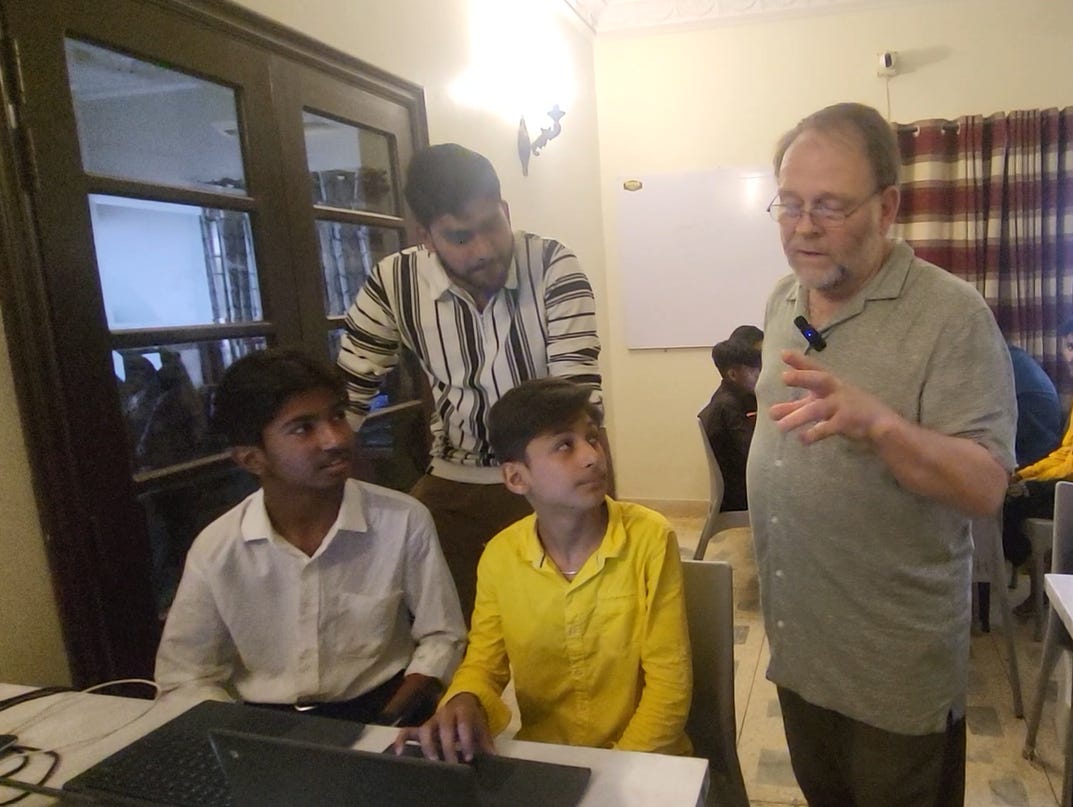
The difference showed in the student projects. They were designing logos, shaping product brands, building presentations, editing promotional videos, and working on business ideas that demanded judgment, communication, and discipline. These assignments carried the pressure of the real world. They asked students to create something useful and present it with confidence.
One project stayed with him. Students had prepared a video presentation called “My Story,” where they explained how their lives had changed since finding Jugnuu. That assignment reached deeper than technical practice because it taught students to speak about their own growth with clarity and self-respect. A student learns software, voice, and self belief.
That confidence was visible everywhere. Students wanted to share their work. They wanted to explain their ideas. They wanted him to see what they had made. Teachers were encouraging original thinking rooted in personal experience, and each project carried its own personality because each student had begun to see their work as something worth standing behind.
A brief internet interruption revealed how much that meant. The connection dropped during the presentations, and the students looked crestfallen because they cared deeply about getting the chance to show their work. Caldwell waited until the internet returned, and the presentations continued. The moment was small, though revealing. They were ready, wanted to be seen, and had something to show.
He also spent time with Jugnuu’s senior students, young people between fifteen and twenty who had already moved into teaching roles, worked on project teams, managed client expectations, and helped younger students through the same path they had once taken themselves. In that structure, Caldwell saw the strength of a model that grows from within. Knowledge being passed onward. Leadership being built inside. Growth with roots.
That part mattered to him because it ties education to responsibility. Jugnuu trains students to contribute, solve problems, handle pressure, and meet standards while building the digital skills that employers now value. The result reaches beyond technical competence. It shapes character. It teaches a young person how to carry themselves with seriousness.
Caldwell spoke clearly about why Jugnuu matters in a city like Karachi. In the modern world, digital literacy shapes who gets ahead, and students from disadvantaged communities across many countries still struggle to gain access to the tools that define current work. Jugnuu gives those students a real foothold.
He was also struck by the link between learning and employment. Students begin with assignments tied to freelance-style design work, and some move on to long-term roles in the corporate and nonprofit sectors. That connection changes the weight of education because effort starts pointing toward something visible. Hope gains shape. Progress gains meaning.
Caldwell also noticed the culture around the work. Jugnuu’s teachers were building self-confidence alongside technical skill by drawing out original ideas, encouraging students to trust their own judgment, and giving them room to present themselves with seriousness. That kind of atmosphere creates confidence that lasts.
His reflections widened from Jugnuu to the larger condition of education around the world. He spoke about corruption, poor investment, and weak educational infrastructure across many systems, and within that larger picture he saw Jugnuu as a serious model of sustainable, marketable education that prepares students to compete globally.
One of his strongest comments focused on Pakistanis living abroad. After meeting Jugnuu’s students, he spoke with conviction about their intelligence, ambition, and capability, and he called for renewed faith in what Pakistani youth can become when given structure, investment, and support.
That point matters because a nation rises through the development of its people. Countries grow when young people gain the ability to think, work, communicate, and lead with competence. Jugnuu is helping build that capacity from the ground up. It is giving students practical skill, stronger self-belief, and a clearer sense of direction.
Caldwell’s visit also gave him a sense of scale. He met members of the Jugnuu team already working on expansion and could imagine centers reaching cities across Pakistan through a model that has already shown what it can do. The vision felt grounded because he had already seen the work with his own eyes.
When he described Jugnuu’s mission, he said:
“I strongly believe that Jugnuu is already a leader in building models for sustainable, marketable education that can help its students compete on at the global level.”
And that Jugnuu is also a place where children from marginalized communities gain confidence while joining a wider network of students, teachers, donors, and leaders committed to the future of Pakistani youth.
Caldwell came as a scholar. He left having witnessed a living example of possibility. In Jugnuu’s classrooms he saw young Pakistanis turning talent into capability and education into a path toward economic and personal strength. He saw the future already at work.
John Caldwell, PhD, is a musicologist and academic based at the University of North Carolina at Chapel Hill. In Spring 2026, he served as a Visiting Scholar in the Program in Comparative Humanities at Habib University in Karachi. His academic work sits at the intersection of the humanities, culture, and education, which gave his visit to Jugnuu added weight.
Jugnuu is building skill, confidence, and opportunity where it matters most. Support the work. Visit a campus. Help more young Pakistanis gain the training that can change a life.