

Ten jugnuu students traveled from Karachi and Kasur to Islamabad and Murree, discovering that some of life’s most important lessons are learned by experiencing the country they hope to build.
Education often begins in a classroom. Sometimes it begins with a road trip.
At jugnuu, students learn digital literacy, communication, and practical skills that prepare them for work. Those skills matter. But education also requires something equally important: seeing new places, meeting new people, and experiencing a country larger than the streets where you grew up.
That belief inspired a recent jugnuu road trip led by Jibran for students from Kasur, Gulzar, Orangi, and Shanti Nagar. Although more students had originally signed up, a few parents understandably decided at the last minute not to send their children. In the end, eleven students climbed into vans in Karachi and Kasur and began a journey that many had never imagined they would take.
For several of them, it would be their first visit to northern Pakistan.
The long drive itself became part of the experience. Students who had grown up hundreds of kilometers apart shared stories, laughed together, and watched the landscape change outside their windows. Towns gave way to open highways, plains slowly turned into hills, and anticipation grew with every passing hour.
Their first stop was Islamabad.
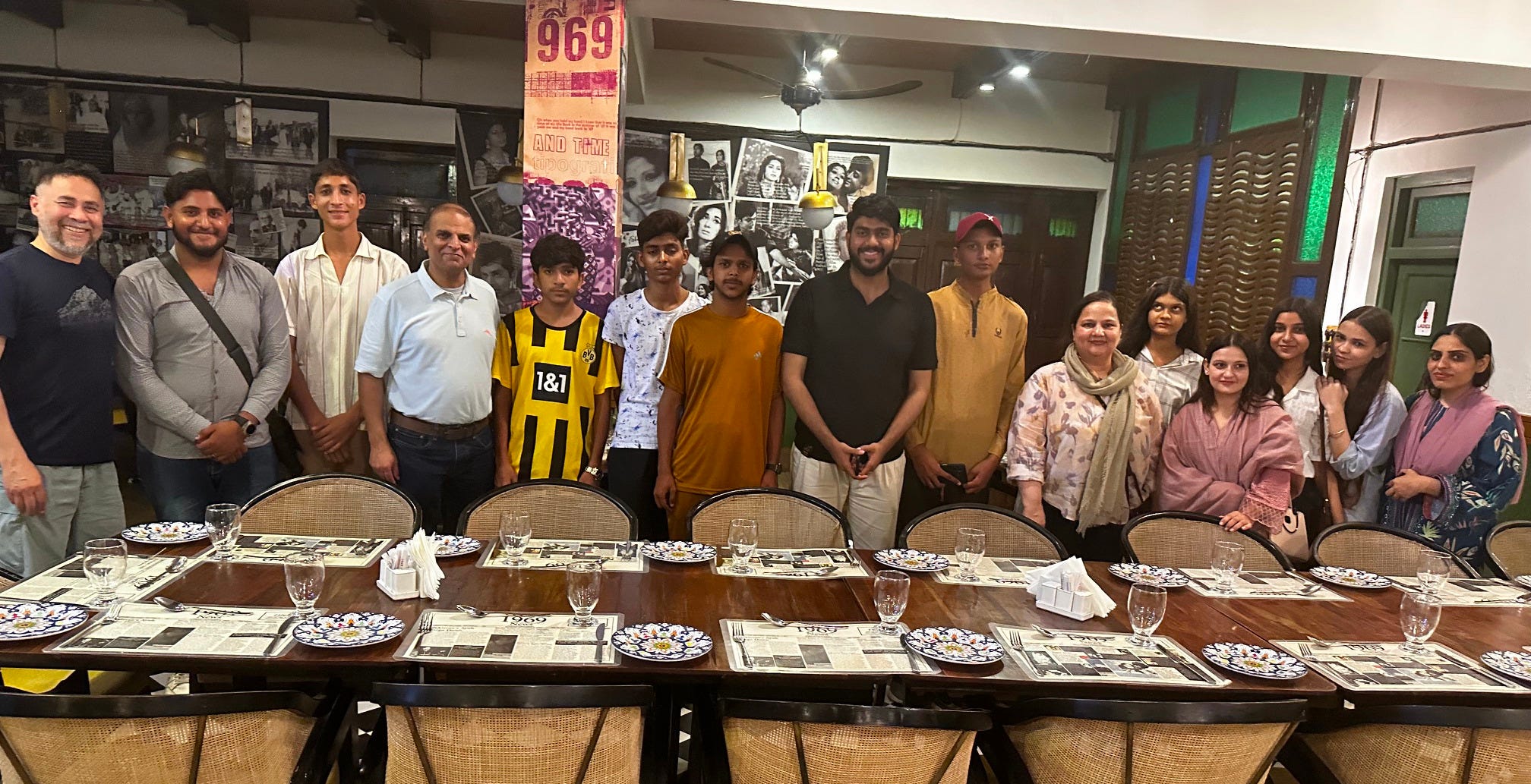
After arriving in the capital, the group enjoyed dinner at 1969 Restaurant in Shakarparian. Surrounded by greenery and overlooking one of Islamabad’s most beautiful areas, it was a fitting welcome to a city that many of the students had only seen in photographs. During dinner, one of the students revealed that they had never been to Islamabad before. That sentiment was shared by other students as well.
The next morning, they set off for Murree.
Their destination was the Kuldana Trail, one of the area’s best-known hiking routes. But as they arrived, dark clouds rolled in and rain swept across the mountains. The trail quickly disappeared beneath mist, making a proper hike impossible.
Sometimes travel teaches flexibility.
Instead of disappointment, the students embraced the moment. They experienced Murree’s cool rain, breathed mountain air many had never felt before, and watched the forests disappear into the clouds. Even though the weather changed their plans, it became part of the adventure.
That evening, the group stayed in Ghora Gali at a house generously offered by one of jugnuu’s supporters.
The home represented far more than accommodation. Its owner hopes to one day establish jugnuu classes there, turning another ordinary house into a place where young people can learn practical skills and build better futures. It was a powerful reminder that jugnuu continues to grow because people across Pakistan believe education is worth opening their homes for.
The following morning, the weather finally cooperated.
The students hiked through the hills surrounding Ghora Gali, walking beneath tall pine trees, climbing mountain paths, and stopping often to admire the valleys stretching into the distance. For many, it was the first time they had ever hiked in the mountains.
Reaching the higher ground brought more than beautiful views.
Students encouraged one another through the climb, celebrated together at every lookout point, and discovered they were capable of more than they had expected. Confidence often grows one step at a time, and the mountains provided plenty of opportunities to take those steps.
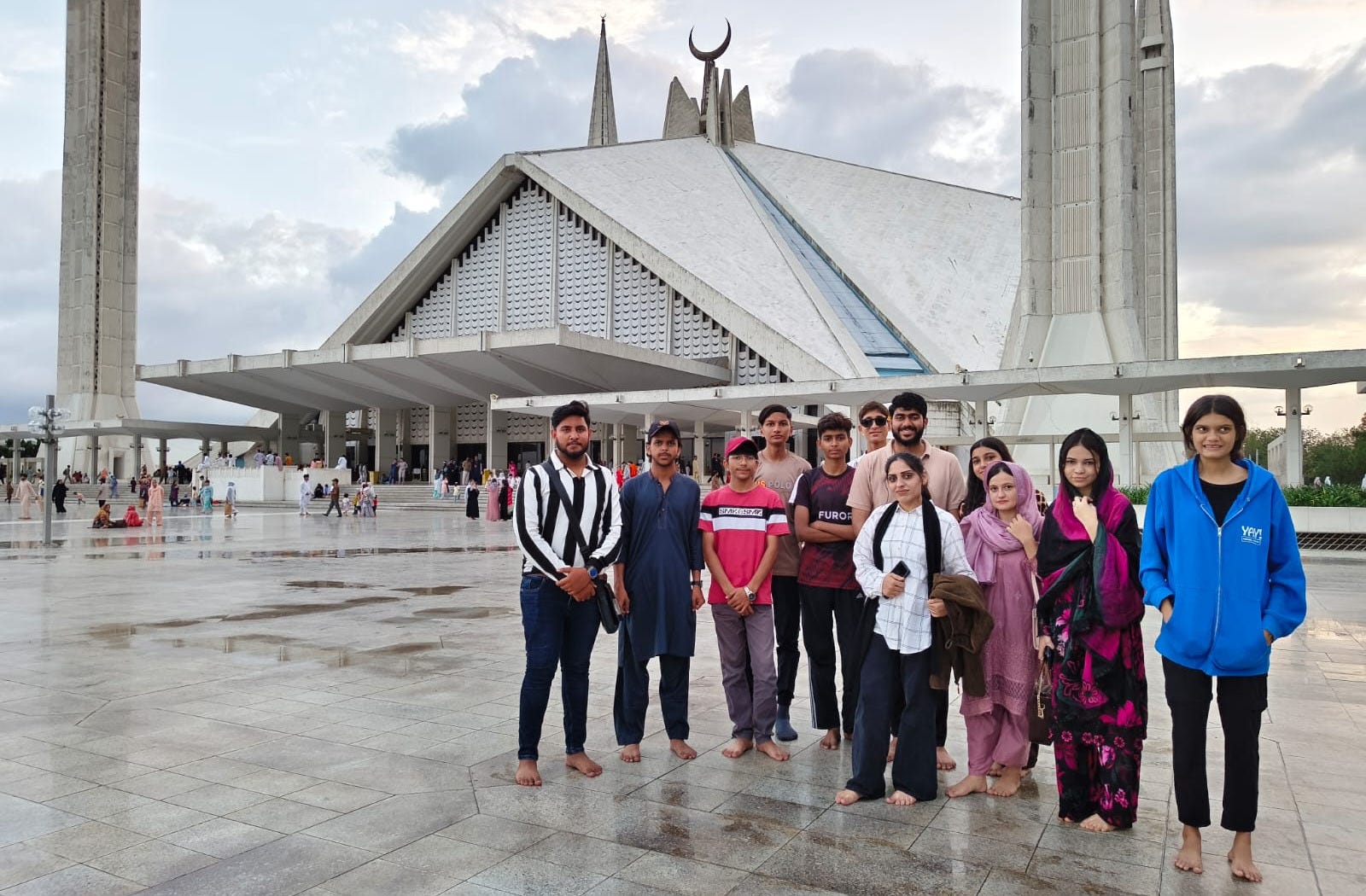
On the return to Islamabad, the journey continued with a visit to Company Bagh before the group explored Raja Bazaar, admired the remarkable architecture of Faisal Mosque, and spent time at Rawal Dam. Each destination revealed a different side of Pakistan. Raja Bazaar showed the energy of traditional commerce. Faisal Mosque reflected the country’s architectural ambition and cultural identity. Rawal Dam offered open spaces and quiet surroundings unlike anything many of the students experienced back home.
The road trip also included a visit to Zahir Pir, adding another stop to a journey that connected cities, towns, mountains, and communities across Pakistan.
Throughout the trip, the students filled their phones with photographs, shared meals, laughed through long drives, and formed friendships that will last long after the journey ends.
For many of them, the greatest discovery was not a particular landmark.
It was realizing how much of Pakistan they had never seen.
The mountains, forests, lakes, and cities they encountered had always existed. Until now, they had only existed in someone else’s photographs or stories. Experiencing them firsthand transformed those distant places into memories of their own.
Travel has a way of expanding ambition.
When young people see more of their country, they begin to imagine larger futures for themselves. They discover new communities, different ways of life, and possibilities that would have remained invisible had they never left home.
That is why jugnuu believes education cannot stop with laptops and classrooms.
Digital literacy prepares students for the modern economy. Communication skills help them express their ideas. Experiences like this help them understand the country they hope to serve.
Together, they build young people with the confidence to shape Pakistan’s future.
The journey from Karachi and Kasur to Islamabad and Murree covered hundreds of kilometers.
For these eleven students, however, the greatest distance they traveled was between the limits of what they had known and the possibilities they can now imagine. That is the kind of education no classroom can provide, and it is a lesson they will carry long after the road home has disappeared behind them.

